




Celeste Fig Tree


$75.00
Celeste is one of the most humid climate-tolerant figs available. Its teardrop shape sheds water effectively, rarely splits, and its skin acts as a waterproof jacket. With a high brix content, Celeste resists fermentation and spoilage—ideal traits for growing in humid conditions.
Celeste is remarkably resilient. Light rain doesn’t affect it; its water-repellent skin provides excellent protection. The figs are small, have a short hang time, rarely split, and dry easily on the tree—making it a perfect choice for humid areas.
According to Condit’s monograph from the 1950s, Celeste was originally called Malta, which might suggest it came from Malta.
However, I strongly believe Celeste originated in France. While Celeste is more popular in the U.S. than anywhere else, the fig tree (Ficus carica) itself did not originate there. All fig varieties were imported, starting with Black Mission in 1768.
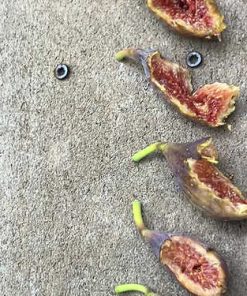
A variety called Violette Marseilles, which closely resembles Celeste, was introduced to the U.S. from France in recent years. This connection sparked my belief in Celeste’s French origins. The photo below compares Violette Marseilles to Celeste, showing subtle differences in the neck and stem.
Additionally, a fig variety called Constans, commonly found in southwest France, bears striking similarities to Celeste. Constans is hardy, early-ripening, and performs well in humid conditions. While it differs slightly from Celeste, the eating experience and interior pulp are nearly identical. Constans and Celeste are likely closely related or that one is a mutation of the other.
Celeste’s popularity in Louisiana further supports this theory, as the region experienced a large influx of French immigrants who brought fig cuttings with them. A notable nursery, Becnel, operated by a French family, was responsible for importing the Smith fig variety from France, suggesting similar pathways for Celeste’s introduction.
In terms of flavor, the original Celeste is your classic sugar fig. It was even once called the “Sugar” fig. A sugar fig is the most simplified and basic version of what a fig is. It’s sweet with melon tones and some dried fruit flavor. Essentially, it tastes like a fig in its most basic sense. There’s no berry flavor whatsoever.
However, when Celeste is allowed to fully ripen on the tree, it develops greater complexity with a hint of Concord grape flavor. For this reason, I believe it more accurately fits within the “Sugar Berry” flavor profile.
It’s the standard for humid climates and a cornerstone of LSU’s breeding program, serving as a parent for many of their fig releases.
Choosing the Right Fig Variety
Why choosing the right fig variety matters
Choosing the right fig variety can make all the difference in so many positive or even negative ways. A variety that is well suited to your climate and taste preferences will ensure that your getting the fig experience that you deserve.
It’s heartbreaking when you put years of work into a tree to finally realize that it’s just not suited to your location because it will rarely produce high quality figs and in some cases, may never produce fruit that’s even edible!
Fig varieties are very location specific because they’re so highly subjected to their environment while they’re ripening. Unlike many other fruits, the fig can be destroyed in its final ripening stage. It’s a soft fruit that can absorb water into its skin causing cracking, splitting, mold & fermentation all because the inside of the fruit gets exposed to the outside elements of nature.
An apple has a hard covering. A persimmon has a hard covering. Berries and other soft fleshed fruits are also susceptible to bad weather conditions, but they have a short window of time in which they’re soft and ready to be picked. Figs can be soft hanging on the tree for 5, 10 or even 15 days!
How to choose the right fig variety for your climate
When choosing a fig variety, it’s important to consider the climate in your area during the winter, summer and fall.
- Some fig varieties are more tolerant of cold weather and others can be grown in climates that have mild summers because of their reliable breba production or their early main crop harvest period.
- Others are better suited for humid climates because they don’t need to hang as long on the tree and they have a skin that acts like a waterproof jacket. The water just slides right off.
- Others are better suited to warmer climates and have the ability to taste incredible even in 100-110F temperatures.
If you want fig variety recommendations, read through the description of each fig variety carefully, or better yet, don’t be afraid to contact me. In your message, include your growing zone, location, annual rainfall, and how you want to grow them.
To read more about choosing the right fig variety, click here:
Be the first to review “Celeste Fig Tree”
Related products


Reviews
There are no reviews yet.